Call us today (325) 600-4396

October 2, 2026
Agentic Commerce: Preparing Your Brand for AI “Shopper” Bots
By Adrian Lasala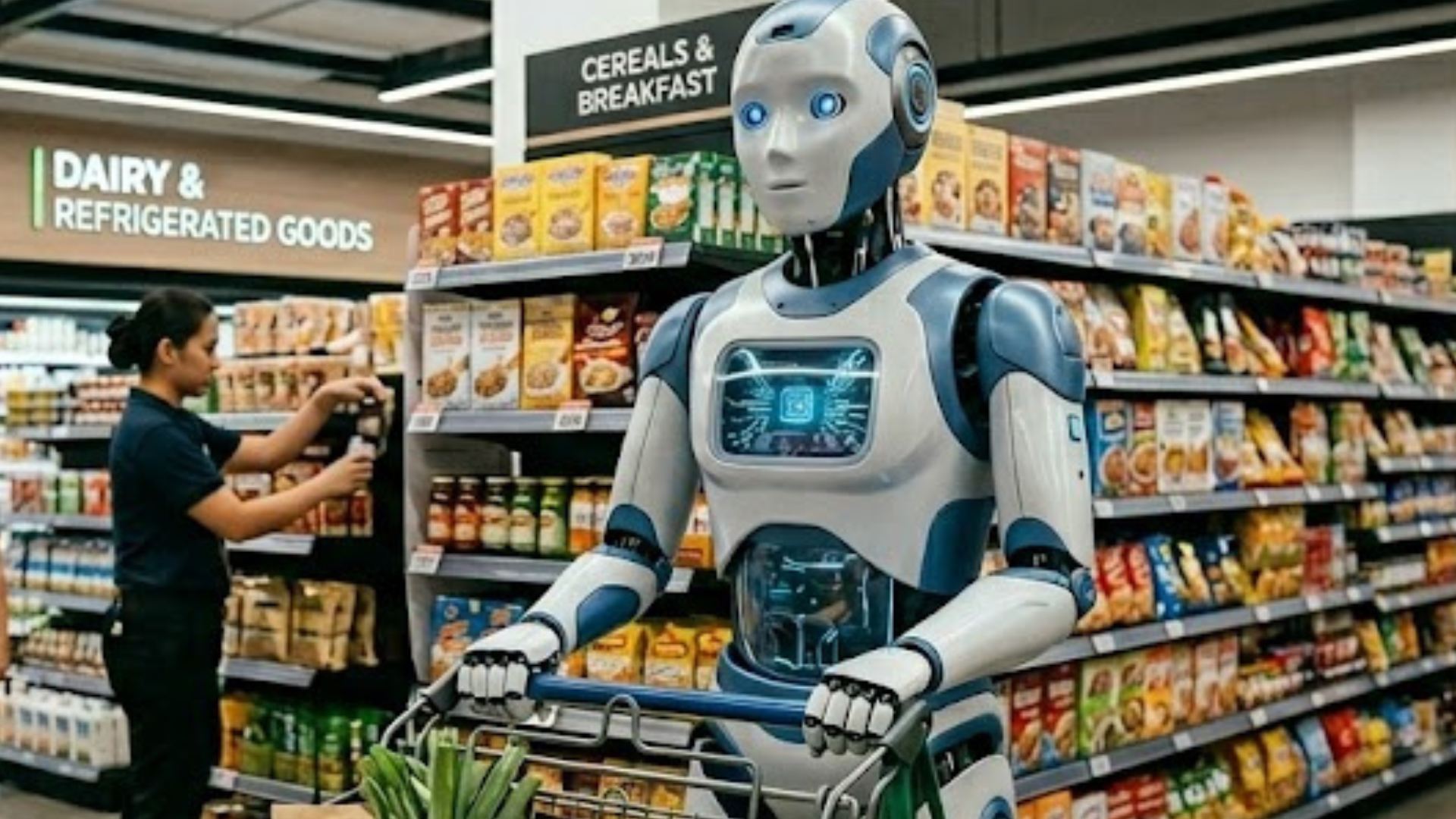
Back To Blog
Intro
The traditional sales funnel is dead. In 2026, the “Awareness, Consideration, and Conversion” phases are being compressed into a single, millisecond-long calculation performed by an AI agent. These bots don’t get distracted by beautiful web design or emotive storytelling; they prioritize Data Fidelity and API Accessibility. If an AI agent cannot “read” your inventory, verify your shipping speed, and execute a checkout via a secure protocol, your brand simply does not exist in the transaction. To survive, you must stop building for eyes and start building for “Machine-to-Machine” (M2M) interaction.
The Death of the “Browse” Phase
Humans browse, but agents retrieve. In 2026, “Zero-Click Commerce” means a user may never see your website before a package arrives at their door. AI agents evaluate thousands of SKUs simultaneously, looking for specific attributes like material density, arch support specifications, and verified sustainability certifications. If this data is trapped in an unsearchable PDF or “flowery” marketing copy, the agent will skip you for a competitor with structured, machine-readable metadata. Discovery has shifted from Search Engine Optimization (SEO) to Answer Engine Optimization (AEO), where the “winner” is the brand that provides the most verifiable logic to the bot.
Machine-to-Machine (M2M) Transaction Protocols
The “Checkout” page is the biggest friction point in 2026. To accommodate shopper bots, brands are adopting Agentic Commerce Protocols, such as the OpenAI-Stripe ACP or Google’s Universal Commerce Protocol. These allow an AI agent to authenticate, provide shipping tokens, and process payments server-to-server without a human ever clicking “Add to Cart.” If your tech stack still requires a human to solve a CAPTCHA or manually enter credit card details, you are effectively blocking the most efficient shoppers in the market. Headless commerce—where your backend is decoupled from your frontend—is now a mandatory requirement for agent compatibility.
The “Trust Tax” and Verification Signals
While bots are logical, they are also highly risk-aversive. In 2026, AI agents act as “Size and Compatibility Guardians” to avoid the “Trust Tax” of returns. They cross-reference your claims against third-party data: Reddit reviews, YouTube teardowns, and historical fulfillment accuracy. A single “out-of-stock” error or a discrepancy between your advertised price and the API-delivered price can lead to a temporary “blacklist” by major agent networks. Maintaining a 100% Real-Time Data Sync between your inventory management system and your public-facing Brand API is the only way to ensure the agent chooses you over a safer, more transparent alternative.
Conclusion
Agentic commerce isn’t just a new channel; it’s a new type of customer. In 2026, your “Brand Voice” is your metadata. By providing high-fidelity product feeds, adopting universal transaction protocols, and ensuring your factual claims are backed by community consensus, you prepare your business for a world where the “shoppers” are as fast as the speed of thought. The brands that win will be those that make it easiest for a machine to say “Yes” on behalf of a human.
To ensure your brand is the one a machine confidently selects in this new era of agentic commerce, you must provide the structured, high-fidelity data feeds and “Brand Voice” metadata that AI shoppers require to make a decision on behalf of a human CLICK HERE.
Frequently Asked Questions
Do I still need a website if bots are doing the shopping?
Yes, but its purpose has changed. In 2026, your website serves two roles: a “Brand Experience” for humans who still enjoy browsing, and a “Data Warehouse” for AI agents. Your frontend must remain beautiful, but your backend must be an open, structured book for the bots.
How do I prevent “malicious” bots while allowing “shopper” bots?
This is the role of the Brand Agent. In 2026, retailers use their own AI gatekeepers to distinguish between helpful shopper assistants (like a user’s Personal AI) and malicious scrapers. You can grant “verified” shopper bots high-speed API access while throttling or blocking suspicious traffic.
What is the “Universal Commerce Protocol”? I
ntroduced in early 2026, it is a standardized language that allows different AI agents (Gemini, Siri, ChatGPT) to talk to different retail platforms (Shopify, Amazon, Walmart) seamlessly. It ensures that a “checkout” command from a bot works the same way regardless of which store it is visiting.
Contact Us Today
Ready to Amplify Your Marketing?
Let's create a digital marketing strategy that drives real results for your business.
Get Free Consultation