Call us today (325) 600-4396
April 17, 2026
Google Ads vs. Meta Ads: Which Platform Delivers Better ROI for Small Businesses?
By Adrian Lasala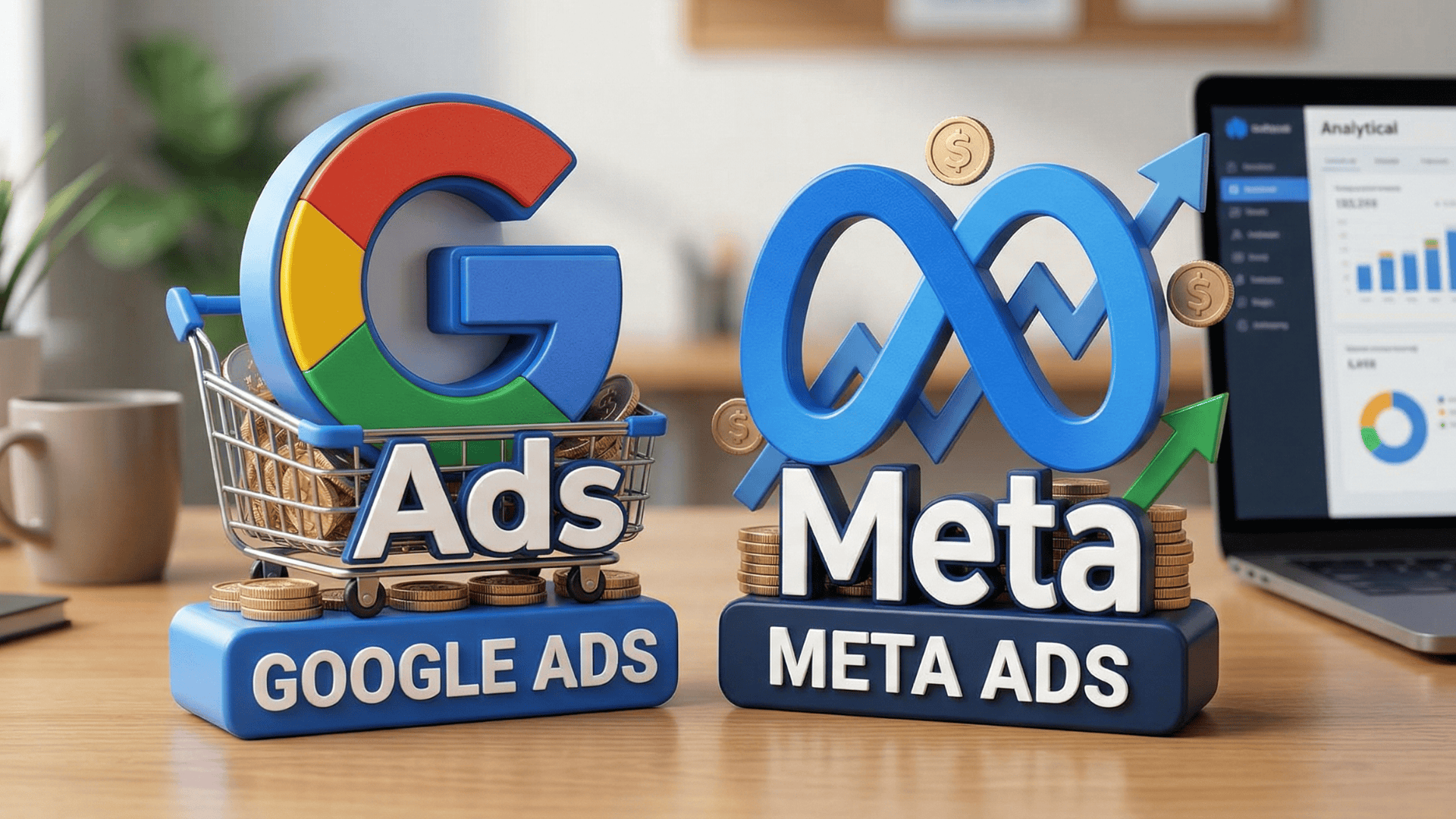
Back To Blog
Intro
The “best” platform for your business isn’t determined by a monthly budget, but by your customer’s psychology. Are they actively searching for a solution to a problem right now, or are they scrolling through a feed to be entertained? While both platforms offer incredible reach, Google Ads and Meta Ads (Facebook and Instagram) operate on fundamentally different logic. Choosing the right one or the right balance of both is the difference between a high-performing lead machine and a drained bank account.
Google Ads: Capturing High-Intent Demand
Google Ads is the king of “Pull Marketing.” When someone types “emergency locksmith near me” or “best organic dog food,” they have a specific problem and are looking for an immediate solution. This is called High Intent. Because you are appearing at the exact moment of need, conversion rates on Google are typically higher.
For a small business, this means you don’t have to convince someone they need your service; you just have to convince them that you are the best person for the job. While the “Cost Per Click” (CPC) can be higher on Google—especially in competitive industries like law or insurance—the ROI is often more direct because you are reaching customers at the very bottom of the sales funnel.
Meta Ads: Building Brand Awareness and Discovery
Meta Ads (Facebook and Instagram) is the master of “Push Marketing.” Unlike Google, people don’t go to Instagram to find a plumber; they go to see what their friends are doing. Meta uses its massive data engine to show your ads to people who likely fit your customer profile based on their interests, behaviors, and demographics.
This platform is unbeatable for visual products, lifestyle brands, or “impulse buy” items that people didn’t know they wanted until they saw them. For small businesses, Meta offers a lower barrier to entry with generally cheaper click costs. It allows you to build a relationship with your audience through storytelling, video, and community engagement. ROI on Meta is often a “long game”—you are building a brand that stays top-of-mind so that when the customer is ready to buy, they choose you.
Conclusion
There is no universal winner in the Google vs. Meta battle. Google wins on intent and immediate conversion, while Meta wins on reach and brand storytelling. For a small business, the best ROI comes from understanding your customer’s journey. Don’t try to be everywhere at once; master the platform that matches your audience’s behavior first, then scale into the other as your revenue grows.
Once you’ve identified that your audience spends their time on social platforms, the next step is learning how to effectively bridge that gap by connecting your accounts to professional management tools. CLICK HERE
Frequently Asked Questions (FAQ)
Which platform is cheaper for small businesses?
Generally, Meta Ads has a lower Cost Per Click (CPC) than Google Ads. However, “cheaper” doesn’t always mean better ROI. While you might pay $0.50 per click on Meta and $3.00 on Google, the Google click is often from someone ready to buy now, whereas the Meta click might just be someone browsing.
Can I run ads on both platforms at the same time?
Absolutely! In fact, a “cross-channel” strategy is highly effective. You can use Meta Ads to introduce your brand to people (Awareness) and then use Google Search ads to capture them when they eventually search for your services (Conversion).
How much should a small business spend to see results?
In 2026, we recommend a starting testing budget of at least $500–$1,000 per month per platform. This allows the AI algorithms enough data to learn who your best customers are and optimize your ad delivery.
Do I need a professional designer for Meta Ads?
Contact Us Today
Ready to Amplify Your Marketing?
Let's create a digital marketing strategy that drives real results for your business.
Get Free Consultation