By Justin Schuback on May 9, 2024
< back to Blog
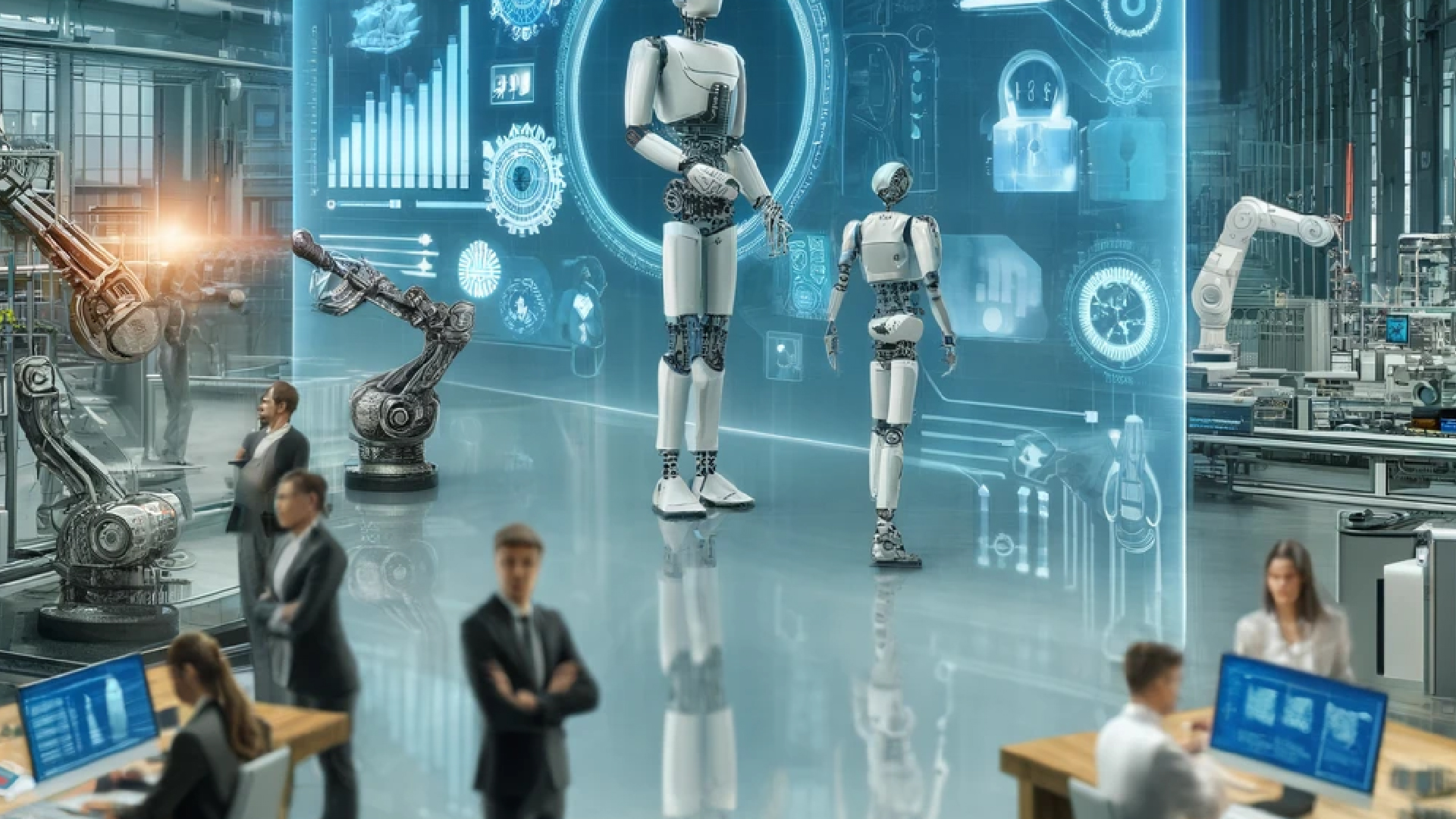
Artificial Intelligence (AI) is transforming business operations across various industries, driving efficiency, innovation, and growth. As AI technology continues to evolve, its impact on business processes will only increase. In this article, we’ll explore the future trends in AI for business operations and make predictions about how AI will shape the corporate landscape.
The Rise of AI in Business Operations
AI has already made significant strides in automating routine tasks, enhancing decision-making, and improving customer experiences. From supply chain management to human resources, AI-driven solutions are becoming integral to business operations. As companies continue to adopt AI technologies, several trends are emerging that will shape the future of business.
Trends in AI for Business Operations
- Hyper-Automation: Hyper-automation involves the use of AI and machine learning to automate as many business processes as possible. This trend is driven by the need to increase efficiency and reduce operational costs. Hyper-automation goes beyond traditional automation by integrating multiple AI technologies to create end-to-end automated workflows.
- AI-Driven Decision Making: AI is increasingly being used to support decision-making processes by providing data-driven insights and predictive analytics. AI algorithms can analyze large datasets to identify patterns, trends, and correlations, helping businesses make informed decisions quickly and accurately.
- Personalization and Customer Experience: AI is enhancing customer experiences by enabling personalized interactions and recommendations. From chatbots and virtual assistants to personalized marketing campaigns, AI-driven solutions are helping businesses tailor their offerings to individual customer preferences and behaviors.
- AI-Powered Supply Chain Optimization: AI is revolutionizing supply chain management by optimizing inventory levels, predicting demand, and identifying potential disruptions. AI-driven tools can analyze historical data and real-time information to enhance supply chain efficiency and resilience.
- Enhanced Cybersecurity: As cyber threats become more sophisticated, AI is playing a crucial role in enhancing cybersecurity measures. AI algorithms can detect anomalies, identify potential threats, and respond to security incidents in real-time, helping businesses protect their data and assets.
- AI in Human Resources: AI is transforming human resources by automating recruitment processes, enhancing employee engagement, and providing data-driven insights into workforce management. AI-driven tools can analyze resumes, predict employee performance, and identify areas for improvement.
- AI and IoT Integration: The integration of AI and the Internet of Things (IoT) is creating new opportunities for businesses to collect and analyze data from connected devices. This trend is enabling predictive maintenance, optimizing energy usage, and improving operational efficiency.
Predictions for the Future of AI in Business
- AI-First Business Strategies: As AI becomes more integral to business operations, companies will increasingly adopt AI-first strategies. This approach involves prioritizing AI initiatives and integrating AI technologies into core business processes to drive innovation and competitive advantage.
- Democratization of AI: The accessibility of AI technologies will continue to improve, enabling businesses of all sizes to leverage AI-driven solutions. Low-code and no-code AI platforms will empower non-technical users to develop and implement AI applications, democratizing access to AI capabilities.
- AI and Workforce Transformation: The rise of AI will lead to a transformation of the workforce, with an increased focus on collaboration between humans and AI systems. Businesses will invest in upskilling and reskilling employees to work alongside AI technologies, fostering a culture of continuous learning and innovation.
- Ethical AI and Governance: As AI adoption grows, businesses will place greater emphasis on ethical AI practices and governance. This includes ensuring transparency, fairness, and accountability in AI systems, as well as addressing biases and protecting privacy.
- AI-Enhanced Innovation: AI will drive innovation by enabling businesses to develop new products, services, and business models. AI-driven insights and predictive analytics will help companies identify emerging trends and opportunities, fostering a culture of innovation and experimentation.
The future of AI in business operations is bright, with numerous trends and predictions pointing to continued growth and innovation. As AI technologies evolve, businesses must stay informed and adapt to these changes to remain competitive. By embracing AI-driven solutions and fostering a culture of continuous learning and innovation, companies can harness the full potential of AI to drive efficiency, growth, and success.
Stay tuned for our next article, where we’ll explore the integration of AI and the Internet of Things (IoT) and its impact on business operations.
To see how we help businesses build resilient, AI-ready digital foundations: CLICK HERE
AI Operations & Future Strategy FAQ
What is the “Brussels Effect” on AI in 2026? This refers to the global impact of the EU AI Act, which is fully applicable as of 2026. Regardless of where your business is located, if you serve global clients, your AI systems must now meet strict standards for transparency, risk management, and bias mitigation.
Will AI replace our middle management? In 2026, the trend is Transformation, not Elimination. Middle managers are evolving into “Agent Orchestrators.” Their value has shifted from monitoring tasks to managing the “Human-AI collaboration” and ensuring that autonomous systems align with high-level corporate goals.
How do I measure the ROAI (Return on AI Investment)? Forget counting “hours saved.” In 2026, ROAI is measured by Release Cycles and Resiliency. Does your AI help you recover faster from supply chain incidents? Does it shorten your time-to-market for new products? These are the metrics that shareholders are now demanding.
Is “AI Fatigue” a real risk for my employees? Yes. To combat this, 2026 leaders are implementing “AI-Free Zones” and focusing on Information Gain. The goal is to let AI handle the “mundane” so that human staff can focus on high-value creativity, strategy, and genuine human connection.
< back to Blog